The common signs a boiler is on its way out are rising energy bills, frequent breakdowns, strange noises, a boiler over 10 to 15 years old, radiators that are slow to heat, a weak or dropping pressure, and a yellow rather than blue flame. A new boiler typically costs from around £1,500 to £4,000 fitted and must be installed by a Gas Safe registered engineer.
A boiler rarely dies overnight. Most give you plenty of warning first: a bit more noise than usual, a heating bill that keeps creeping up, a radiator that never quite gets hot. The trouble is that those signs are easy to live with and easy to ignore, right up until the coldest week of the year when the boiler finally gives up. Spotting the warning signs early lets you plan a replacement on your terms, rather than paying an emergency premium in the middle of winter. Here are the seven signs worth paying attention to, and what to expect if it does turn out to be time for a new boiler.
Your Boiler Is Getting On
Age is the single biggest clue. A well looked after boiler will usually give you somewhere between 10 and 15 years of reliable service. Once it is past that, two things happen. First, it becomes less efficient, so more of the gas you pay for goes up the flue rather than into your home. Second, spare parts get harder to find, which makes repairs slower and more expensive when they are needed.
If you do not know how old your boiler is, the installation date is often on a sticker inside the casing or on the paperwork from when it was fitted. An older boiler that is still working is not an emergency, but it is a good reason to start thinking ahead rather than waiting for it to fail.
Rising Bills and Frequent Breakdowns
Two of the clearest signs show up in your wallet.
- Rising energy bills: An ageing boiler gradually loses efficiency. If your heating bills are climbing even though your usage and the weather have not really changed, that lost efficiency is often the reason. A modern high-efficiency boiler can claw a good deal of that back.
- Frequent breakdowns and repairs: The odd repair over the years is normal. But once you are calling an engineer more than once a year, the repair bills start to add up, and a new boiler often works out cheaper than pouring money into an old one. As a rough rule, if a repair costs a large chunk of what a replacement would, replacement is usually the better call.
It is worth keeping a note of what you have spent on the boiler over the last couple of years. When you see it written down, the decision often makes itself.
Not Sure Whether to Repair or Replace?
Call Gas Direct Service on 07983 683930. Bashir will take an honest look at your boiler and tell you whether it is worth repairing or better replaced, with free quotes across North and West London.
Call for a Free QuoteStrange Noises, Slow Heat and Leaks
The boiler itself will often tell you something is wrong, if you know what to listen and look for.
- Strange noises: Banging, gurgling, whistling or a low kettling sound are not normal. They usually point to sludge in the system, a failing pump, or the heat exchanger struggling. Some of these are fixable, but on an older boiler they are often a sign the end is near.
- Radiators slow to heat: If your rooms take far longer to warm up than they used to, or radiators are cold at the bottom, the system is not moving heat around as it should. Sometimes a power flush sorts it, but combined with age it can point to a tired boiler.
- Leaks and drips: Any water pooling around the boiler needs looking at. A leak can cause corrosion and damage over time, and it should never be ignored. If you can see water escaping, switch the boiler off and call a Gas Safe engineer.
Low Pressure and the Colour of the Flame
Two more signs are easy to check yourself.
- Low or dropping pressure: Most boilers have a pressure gauge that should sit around 1 to 1.5 bar when the heating is off. If you keep having to top it up and it keeps dropping, there is a leak somewhere in the system or a failing part that needs investigating.
- A yellow flame instead of blue: The flame inside a healthy gas boiler burns a crisp blue. If you can see it burning yellow or orange, that can point to a combustion problem, and it should be checked by a Gas Safe engineer straight away. A yellow flame is one sign that should never be left.
None of these signs on its own means you definitely need a new boiler. But when several show up together, especially on a boiler that is already over 10 years old, they usually add up to the same answer.
What a New Installation Involves
If it does turn out to be time for a replacement, the process is more straightforward than most people expect.
- Survey first: We look at your existing boiler, pipework, radiators and controls, ask how your household uses hot water, and recommend the right boiler for your home rather than the most expensive one on the shelf. You get a clear fixed price before any work starts.
- Installation day: Most straightforward swaps take one to two days. We remove and safely dispose of the old boiler, fit the new one, connect and test everything, and leave the work area clean and tidy.
- Commissioning and handover: The new boiler is commissioned, pressure tested and safety checked. We show you how it works, and register the manufacturer warranty on your behalf.
By law, boiler installation must be carried out by a Gas Safe registered engineer. That protects your safety, your warranty and your home insurance, so it is never worth cutting corners on.
What a New Boiler Costs
A new boiler typically costs from around £1,500 to £4,000 supplied and fitted. Where you land in that range depends on a few things.
- The boiler you choose: Brand, output and warranty length all affect the price. A longer manufacturer warranty usually means a slightly higher upfront cost.
- Your system: A straight like-for-like swap costs less than moving the boiler, changing the boiler type, or upgrading tired pipework at the same time.
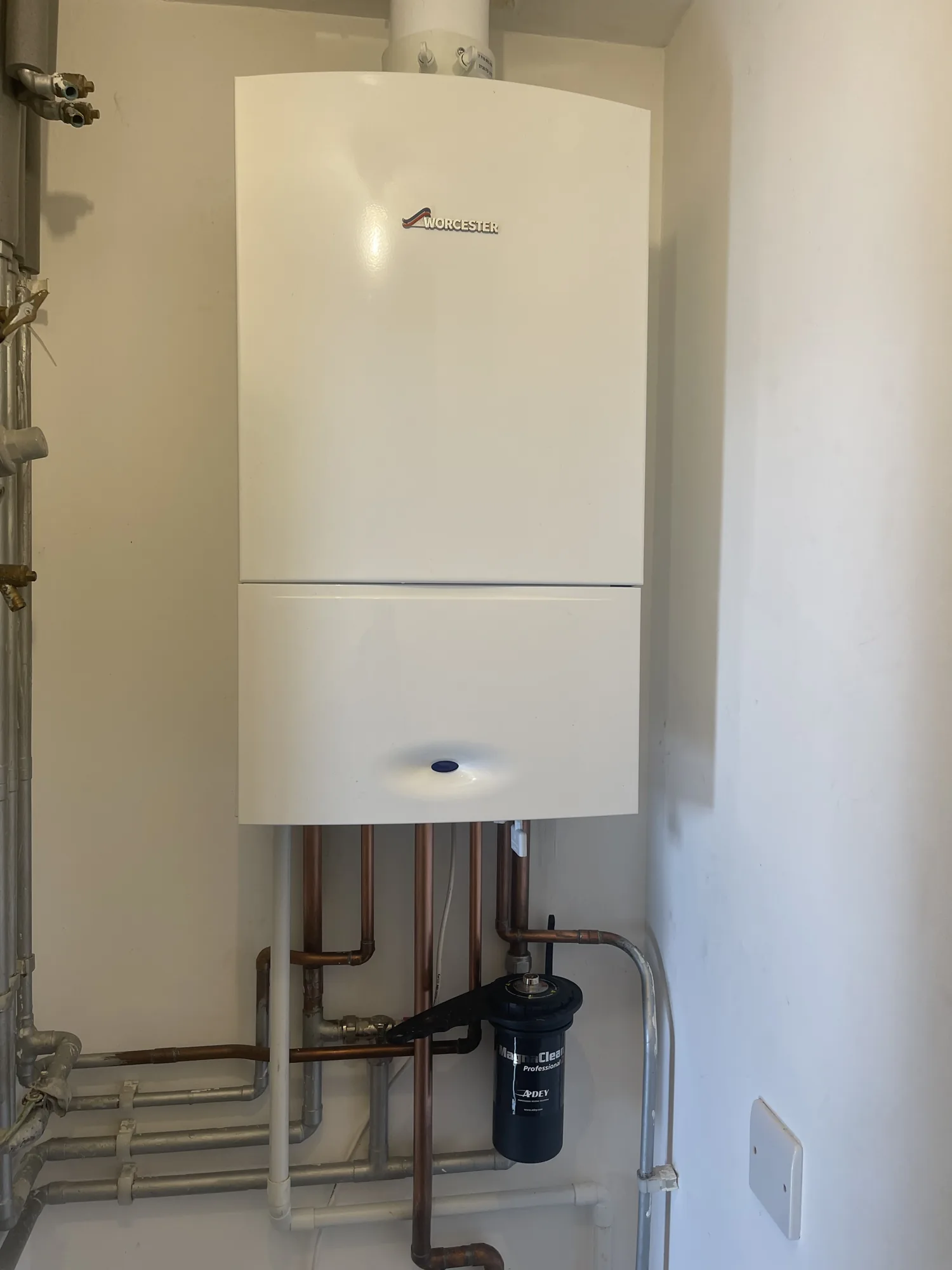
- Extras worth having: A magnetic system filter and, where useful, new controls or a smart thermostat protect the new boiler and help it run efficiently.
We give you a clear, itemised quote after surveying your home, so you know exactly what is included and there are no surprises. If you would like an honest opinion on whether your boiler has life left in it or is better replaced, we are happy to take a look.
Frequently Asked Questions
A well maintained boiler usually lasts between 10 and 15 years. Once it is past that age it becomes less efficient and parts get harder to source, so it is worth planning ahead. An annual service is the best way to get the most years out of it.
It depends on the age of the boiler and the cost of the repair. If your boiler is under 10 years old and the fault is minor, repair usually makes sense. If it is older, breaking down often, or the repair costs a large share of a replacement, a new boiler is normally the better long-term value. We will give you an honest view either way.
Not necessarily. Pressure that keeps dropping usually points to a small leak in the system or a failing part such as an expansion vessel, which can often be repaired. It is worth having it checked so the cause is found rather than just topping the pressure up again and again.
A straightforward like-for-like swap is usually completed in one to two days. If we are moving the boiler, changing the type of system, or updating pipework at the same time, it can take a little longer. We will tell you exactly what to expect when we quote the job.